


March 17, 2026
Topic
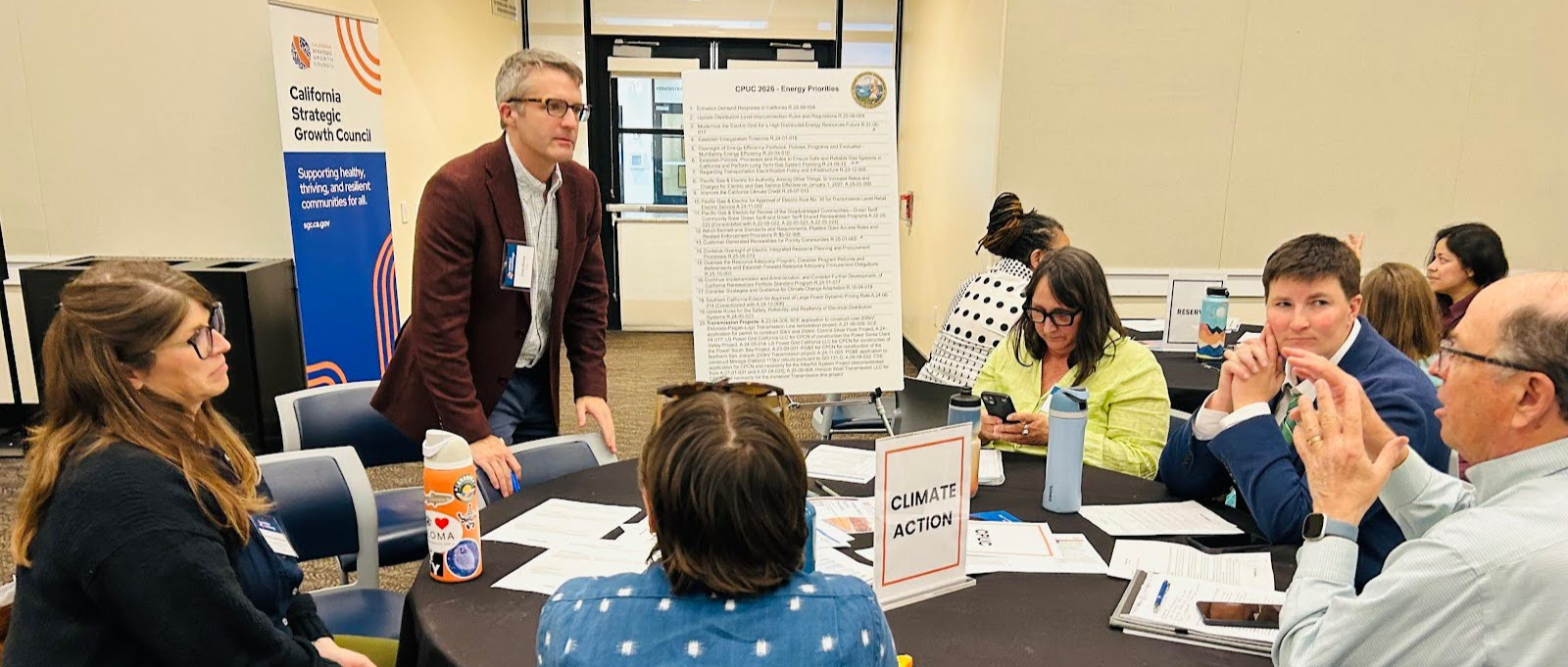
Photo: Representatives of nearly 100 Central Coast community-serving organizations provided recommendations to the State on energy, climate, and land use needs and shared input on 16 specific state agency-led initiatives during the LCI/SGC Catalyst Convening on March 19, 2026, in Salinas. CCEC is a planning partner of this regional series and synthesizes the region’s input into its reports and other materials.
New report describes how California can deliver state and local solutions that really address the biggest barriers to accelerating place-based energy and climate progress
California’s climate and energy goals are among the most ambitious in the world, but achieving them depends on unlocking the untapped potential of local communities through stronger, and more streamlined state–local coordination.
That’s what the State-Local Energy and Climate Coordination (SLECC) initiative set out to do. Launched in 2023 by CivicWell’s California Climate and Energy Collaborative (CCEC), SLECC has brought together over 1,000 state and local practitioners across 20+ convenings to identify barriers and co-create solutions for accelerating place-based progress. The 2025 SLECC Report reflects what we’ve learned so far.
Why This Matters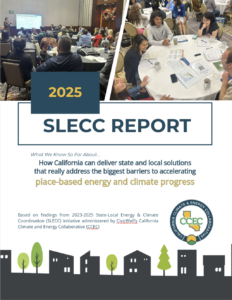
Local governments and community-serving organizations are essential to implementing clean energy, decarbonization, climate and other related strategies. Yet, they face systemic challenges: fragmented funding, complex regulatory processes, and insufficient capacity. Without reform, these barriers risk slowing California’s transition to a resilient, clean and just future.
Most of us who work at the state-local interface know the pattern: a new program rolls out, locals scramble to engage, a few comments get submitted, and then we wait to see what sticks. Then we do it all over again. It’s not for lack of effort. It’s because we’ve never really built the infrastructure for ongoing, two-way coordination or to systematically share or respond to the input generously offered. That’s the gap SLECC was designed to fill—and this report shows what’s possible when we start to close it.
What intended readers like local and state practitioners and policymakers will find in these pages is the product of three years of coordination, diplomacy, experimentation, and a deliberate commitment to accumulating a deep understanding of real world place-based needs and opportunities that will help us make an informed transition to action. Through regional convenings, quarterly meetings, and direct engagement with participants across California, SLECC has surfaced and amplified what’s holding back place-based progress across topics ranging from building decarbonization and climate action planning to transportation electrification and housing.
Key Findings
SLECC synthesized more than 800 challenges into 32 systemic barriers across seven topic areas. In late 2025, participants identified 13 priority barriers across three strategic areas for 2026.
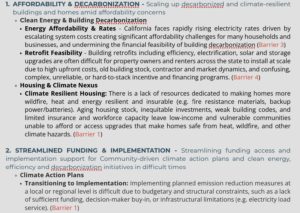
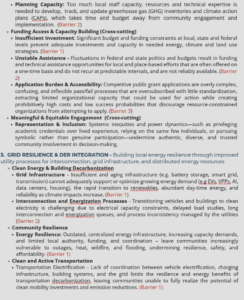
The three priorities shaping SLECC’s work heading into 2026 reflect where the pain is sharpest and the opportunity is greatest. These aren’t abstract policy goals. They’re the things local and state staff are trying to figure out every week, often without enough support, resources, or authority.
The 2025 findings point to barriers that will surprise exactly no one who works in this space, but that are now documented with a level of prioritization, specificity and consensus that should be hard to ignore. These aren’t new problems. But having approximately 200 solution ideas collected and organized around them, with clear 2026 priorities, gives us something we haven’t always had: a shared platform to push from.
As we turn full focus on addressing these barriers, one thing has already come through clearly: regional collaboration matters. When we invest in it, we can streamline engagement, planning, and service delivery in ways that actually work for communities and for the state.
Read this report as a starting point, not a final word. If you see your community in these pages, reach out. If you have solutions, bring them forward. No single agency has the full picture—but together, we’re getting closer.
What’s Next
Real coordination is more than talk. It’s systems change and operational reforms. And this moment calls for more than incremental change and will require leveraging all we have.
In 2026, SLECC will:
- Share and amplify this report across local, regional, and state partners
- Advance actionable solutions in the three priority areas
- Stand up Regional Energy and Climate Hubs (REACH) to deliver sustained state-local engagement and technical assistance
- Launch an Assistance Marketplace to connect communities with trusted experts
- Continue building the evidence base through a living SLECC dashboard that tracks barriers, solutions, and real-world results
Read this report as a starting point, not a final word. If you see your community in these pages, reach out. If you have solutions, bring them forward. We know there’s more to learn and do. You can be part of that. Please help us by attending our meetings, updating our dashboard’s knowledge base, or sponsoring CCEC Forum and other services.
The bridge we’ve built with state and local partners through SLECC is now ready to carry actionable solutions forward. Join us.
