





April 28, 2026
Topic
By Bernadette Austin
Spring is a time for rebirth and renewal. It’s not an accident that events like Earth Day and Climate Week celebrations take place during this month. For those of us working in climate resilience and environmental sustainability, it is a time to come together and plant the seeds for what we hope to harvest in the future.
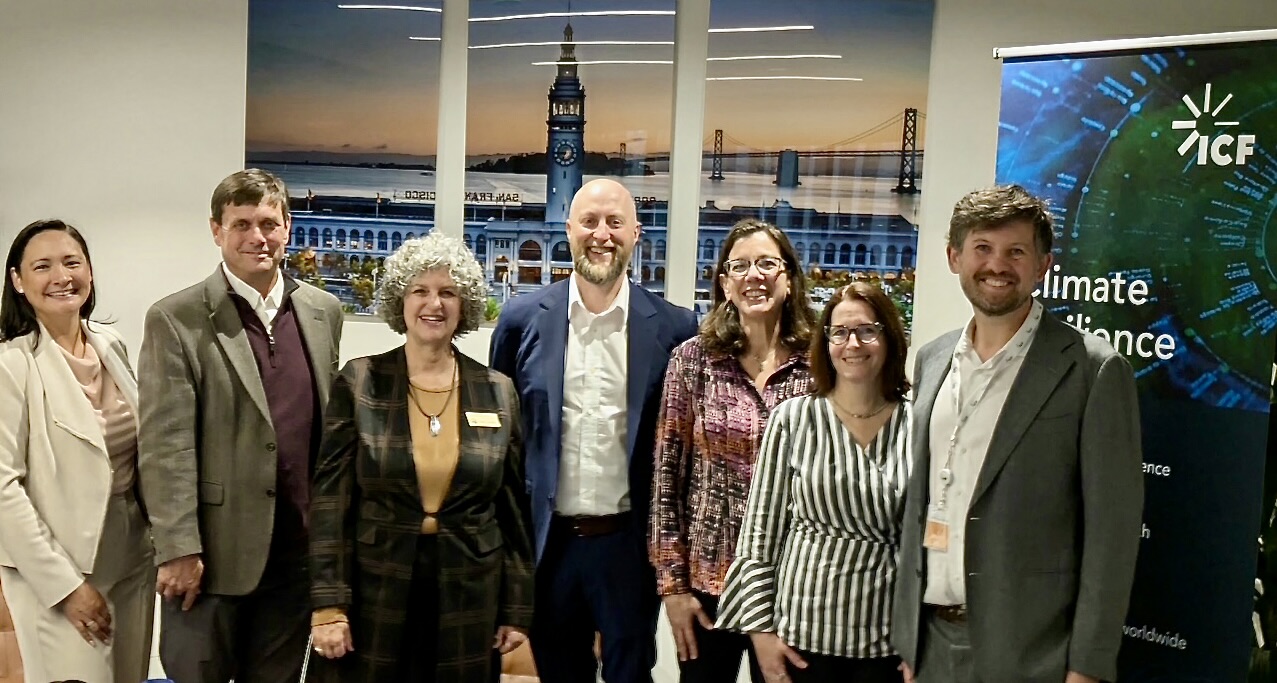
In April I participated in a number of events, and there was a pervasive sentiment throughout that California Natural Resource Secretary Wade Crowfoot described well. “We need a brand of ambition that is highly pragmatic,” he declared at Accelerating the Transition. He said that those of us working on climate resilience can be ambitious about where we are going but pragmatic about how we get there. This sentiment was echoed on the panel I moderated at that same conference, which featured CivicWell Board members Gabe Quinto (El Cerrito Mayor) and Mike Wilson (Humboldt County Supervisor). Together with their fellow panelists Berkeley Vice Mayor Igor Tregub, Oakland City Councilmember Charlene Wang, and Bay Area Rapid Transit Director Barnali Ghosh, this panel highlighted case studies of local initiatives advancing a clean energy transition. They shared important insights and words of caution on how local leaders must be pragmatic with civic innovation even while they aspire to great things for their community. Drawing on their experience as immigrants, two panelists shared personal stories about what fueled their work for energy independence and fighting for global communities devastated by climate disasters. At a roundtable discussion ICF hosted for San Francisco Climate Week, some participants raised creative roles for the private sector, including building a business case for resilience and innovative capital stacking. At this same gathering, several experts underscored how important youth engagement was for a variety of reasons, including securing institutional knowledge for decades-long infrastructure projects. They also discussed effective strategies, like collaborating with colleges and gamifying outreach strategies. Participants also raised the urgency of the situation, noting that California coastal residents are losing homes to sea level rise and wildfire. We need solutions now, not a decade from now. Participants also raised that controversial but critical conversations must be had around managed realignment of assets that may require relocation or rewilding of existing land uses. These discussions highlighted the importance of looking far into the future while keeping our feet firmly planted in reality.

Even in spite of near-universal calls for pragmatism, these recent gatherings have underscored just how achievable our ambitious targets are. At Accelerating the Transition, Stanford Professor Mark Jacobson shared compelling details about clean energy sources by type at both the national and global scales. He noted that China is already generating enough clean energy to meet all of the US’s current energy demands. At the Climate Center’s California Climate Policy Summit, CEO Ellie Cohen shared that in 2025, China sold more electric vehicles (EVs) than gas-powered vehicles. This amounts to more EVs sold in China than all cars sold in the US. Panelists at a subsequent breakout session at that same conference continued with related insights. Pre-2004 passenger cars and trucks represent only 19% of California’s registered vehicles and account for just 12% of total miles driven, yet they produce 73% of all nitrogen oxide emissions from passenger vehicles. At Accelerating the Transition, UC Davis Distinguished Professor Dan Sperling noted how deeply affordable EVs are in China. Collectively, this information tells us that our ambitious targets are achievable, but that social equity cannot be decoupled from the solution.
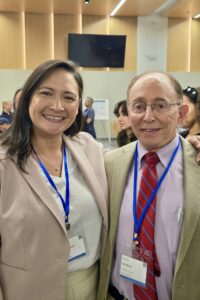
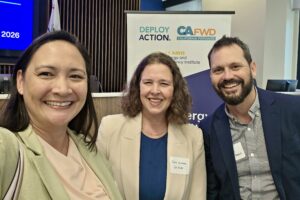
At the Accelerating the Transition, El Cerrito Mayor Gabe Quinto underscored that to reach our climate resilience goals, it is imperative to address the concerns of middle-class and working class residents. At the Clean Energy Affordability Summit, (hosted by Deploy Action, UC Davis Energy and Efficiency Institute, and California Forward), Matthew Freedman from the Utility Reform Network (TURN) shared sobering information about utility affordability. One-third of low-income households are late in paying their utility bill, which is a strong indicator of the burden of rising utility rates. He cited a recent survey that showed that budget concerns about utility costs beat healthcare and groceries, with concerns about rising utility costs taking the dubious position as the second biggest household budget concern–only following housing costs. According to Freedman, utility rates have gone up 60% in PG&E territory and 90% in SoCal Edison territory. He argues that wildfire carries significant blame for this, since transmission rates have more than doubled. At Accelerating the Transition, Secretary Crowfoot reported that 10% of the state has burned in the last decade, and many of those were catastrophic.
Across these gatherings, speakers were quick to point out that we have significant headwinds. Global instability is a top concern–from politics and macro-economics to global safety and security. Federal policies are undercutting and counteracting decades of progress in many industries. At the California Climate Policy Summit, California Forward Chief Operating Officer Nuin-Tara Key pointed out that California has structural budget issues as evidenced by the fact that the state is in its fourth straight year of a state budget deficit in the face of record returns. And even in spite of all this, we must have hope. At Accelerating the Transition, Governor Gavin Newsom reminded us that, “For all the headwinds, there is a tremendous amount that is happening at the local level.”
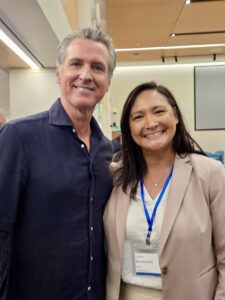
Hot on the heels of hosting two of our own major events, (Policy Bridge in February and the Policymakers Conference in March), it was important for CivicWell to serve as planning and promotional partners for these types of gatherings. The most enduring solutions will emerge from collaboration, and we shared so many ideas for solutions at gatherings this month. As the Governor reminded us at San Francisco Climate Week, “Remarkable things continue to happen at the local level, and all of you are a testament to that.”

Cap-and-Invest Crossroads—And Why Local Tools Matter Now
By Steve Hansen, Managing Partner, Lighthouse Public Affairs
California’s updated Cap-and-Invest proposal is shaping up to be a consequential pivot point—not just for carbon pricing, but for the state’s entire climate investment
architecture.
The California Air Resources Board (CARB) is advancing amendments that would significantly increase utility and refinery allocations to fund enhanced climate credits. While aimed at short-term affordability, the tradeoff is stark: a projected reduction of roughly $1.5–$1.6 billion annually from the Greenhouse Gas Reduction Fund (GGRF). A coalition letter led by the California Transit Association and SPUR, representing more
than 30 transit and housing organizations, warns that this shift could effectively zero out sustained investments in cornerstone programs like the Transit and Intercity Rail Capital Program (TIRCP), Low Carbon Transit Operations Program (LCTOP), and Affordable Housing and Sustainable Communities Program (AHSC).
That’s not a marginal adjustment—it’s a structural reallocation away from transit, infill housing, and community-scale decarbonization. These programs have been the backbone of California’s integrated climate strategy, aligning emissions reduction with affordability, mobility, and land use. Weakening them risks unraveling a decade of coordinated policy.
This comes at a moment when federal signals are moving in the opposite direction. Proposed rollbacks, regulatory uncertainty, and reduced federal clean energy commitments are creating real headwinds for project delivery. The result: California is being asked to do more with less, just as its primary climate funding stream is under pressure.
That’s where legislative backstops like AB 2389 (Irwin) become especially relevant. AB 2389 is a targeted fix to keep local clean energy projects viable—preserving the property tax exclusion for on-site solar at schools, local governments, and other public facilities, particularly those financed through power purchase agreements, so they aren’t hit with new tax costs that can stall or cancel deployment. In effect, AB 2389 is a local resilience tool. It protects the economics of public-sector solar at a time when both federal policy and state funding streams are increasingly uncertain.
The throughline here is urgency and alignment. CARB’s May consideration of the Cap- and-Invest amendments will define the near-term future of GGRF investments. At the same time, the Legislature has an opportunity to reinforce—rather than erode—the state’s climate delivery system through targeted, implementation-focused bills.
California’s climate leadership has always depended on pairing market mechanisms with real, on-the-ground investments. The question now is whether the state stays that course—or trades long-term progress for short-term relief.

CivicWell’s 2025 Impact Report
2025 was a year of taking stock and focusing on plans for a prosperous future. We just shared our 2025 Impact Report, and we invite you to take a look!