


September 4, 2026
Topic
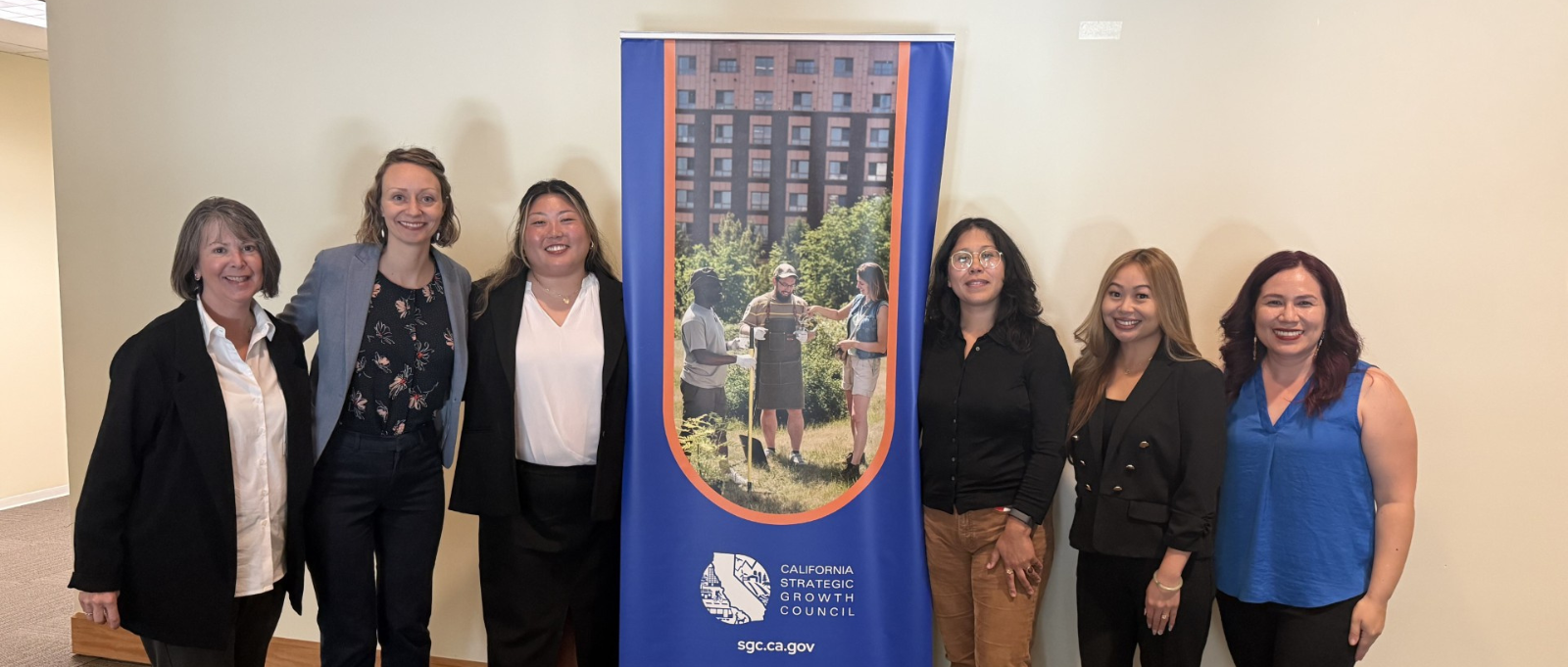
Photo Caption: Regional Climate Collaboratives Program Grantees shared outcomes and lessons learned from their 3-year grants with the Strategic Growth Council in August 2026. From left: Melanie Smith, Gateway Cities Regional Climate Collaborative (GCRCC); Ena Lupine; Aileen Qin, GCRCC; Nayre Herrera, Marin Climate Justice Collaborative; Christine Tran, San Joaquin Regional Climate Collaborative; Natalie Hernandez, GCRCC
I hear it again and again when meeting with frontline communities throughout the state – applying for grants is too hard – particularly when you’re strapped for resources and staff. Rural, Tribal, and other under-resourced communities to often do not have staff capacity to compete for funding to protect themselves from vulnerabilities to wildfire, flooding, extreme heat, air pollution, and failing infrastructure. Communities with fewer anchor institutions, or where community-serving organizations are spread thin, struggle to advance projects and access funding due to the very challenges that make them most in need of investment.
The California Strategic Growth Council’s (SGC) Regional Climate Collaboratives Program was created to address this problem. Established through Senate Bill 1072 (Leyva, 2018), the program funds coalitions of regional partners in under-resourced communities to establish priorities, develop a pipeline of projects, and align projects with state, federal, and philanthropic funding opportunities. It aims to interrupt the cycle of resource scarcity that many under-resourced regions experience by enabling community-rooted and cross-sectoral partners to deepen their relationships and develop the processes, plans, and projects that will drive and sustain climate action.
In the first round of the program, SGC was able to provide $8.35 million to six diverse collaboratives across the state, including a total of 62 organizations. After a three-year grant term, the outcomes from the first cohort of grantees have been astounding. The six collaboratives have:
- Leveraged more than $85 million
- Submitted 165 competitive grant applications for a total of $233 million
- Held more than 600 internal meetings and 540 external meetings
- Engaged more than 12,500 community members through Collaborative activities.
Keep in mind that these funds were leveraged during a state budget crisis and historic funding cuts at the federal level.
While the numbers are impressive, (did you notice that is a 10x return on investment?!) the true story of RCC’s impact is in the long-lasting relationships they built, the plans they developed, and the vision for their communities and regions that they developed together.
At a recent SGC Council Meeting, Christine Tran of the San Joaquin Regional Climate Collaborative shared:
“Ultimately, what really distinguished this program is its potential to continue beyond the grant itself. RCC has helped us build shared capacity, stronger relationships, and new ways of working together. So, for us, the program is not just about what we’ve accomplished through the funding today, it’s about creating a stronger foundation for coordinated and sustainable climate solutions in the future.”
Here are just a few examples of how Round 1 RCC grantees have invested their time in a brighter future:
- The Tribal Energy and Climate Collaborative (TECC) has developed 8 programs for Tribes, ranging from electric vehicle infrastructure and workforce training to community transportation planning support. The programs were developed through conducting needs assessments with member Tribes, identifying more than 50 priority needs and projects.
- The Siskiyou Climate Collaborative developed the first Siskiyou County Climate Resiliency Plan through engagement and close collaboration with local residents, community-based organizations, government agencies, tribes, and businesses.
- The San Joaquin Regional Climate Collaborative formed Community Advisory Boards (CABs) for each of their communities of focus in Lodi, Tracy and North Stockton and worked with the members of each CAB and local city staff to develop Sustainable Neighborhood Plans.
- The 2030 Resilient Networks Collaborative are developing a Tribal Technical Assistance Toolkit, an online platform that will provide practical resources to assist Tribes and under-resourced communities in the Los Angeles region to access climate resilience funding, project development, and technical assistance opportunities.
- The Marin Climate Justice Collaborative worked with a resident-led Consejo to create Nuestro Canal, Nuestro Futuro Canal Neighborhood Snapshot (available in Spanish and English), which creates a framework rooted in community priorities, needs, and assets for the Canal District Visioning Plan.
- The Gateway Cities Regional Climate Collaborative hosted a series of emergency preparedness workshops in the aftermath of the Los Angeles County wildfires and developed a Gateway Cities Regional Climate Collaborative Roadmap to inform future climate resilience efforts in the region.
While SB 1072 called for SGC to administer at least two rounds, the program lost its Round 2 funding due to a budget shortfall, and SGC has so far been unable to secure alternative funding. However, we continue to explore pathways to continuing the program and plan to uplift the successes and lessons learned from our first cohort. While future funding remains uncertain, we plan to maintain strong relationships with our first round of grantees and are excited to see the ripples of their work continue to emerge.
As Aileen Qin of the Gateway Cities Regional Climate Collaborative shared, “a partner is being able to call someone and know that they’ll pick up the phone.” After three years of hard work and relationship-building, the next time she sees an exciting grant opportunity, she now has a slew of new partners she can call.
And the results of that hard work will continue to bear fruit in frontline communities across California thanks to these six inaugural Regional Climate Collaborative Program grantees, who have proven the big impact that a small investment in capacity building can make.
Want to learn more about the Regional Climate Collaboratives Program?
Find out more about the Regional Climate Collaboratives Program, our Round 1 grantees, and their accomplishments. You can also check out this video about RCC’s impact in communities across the state.