




September 4, 2026
Topic
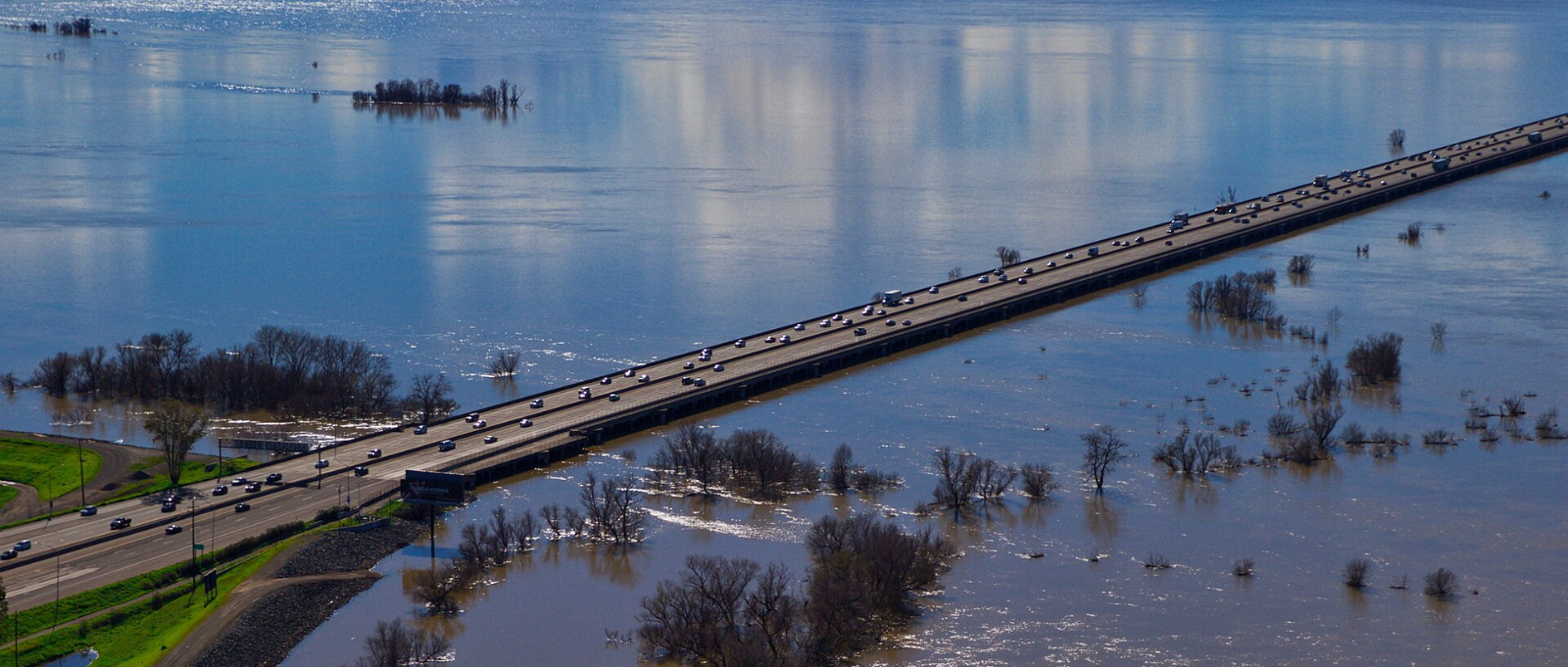
Caption: The Yolo Bypass illustrates how collaborative learning can help us see old infrastructure in a new light and discover new purposes for systems built to solve yesterday’s problems. Photo: Steve Martarano, U.S. Fish and Wildlife Service (public domain).
“The CPUC is a moribund institution.” So I was told in 2018 by a local government leader in climate and energy with significant experience with the agency. Having just come from federal and international water policy, I was not yet in a position to judge.
With almost nine years working between local government and CPUC staff and processes, and having just spent the summer working with leading adaptive resource governance experts, I’m ready to give my formulation.
The CPUC is good at what it does, building and innovating on the IOU-centered model. In the pursuit of California’s energy, climate, and equity goals it has been able to facilitate and accommodate new actors, technologies, and markets. But the architecture underneath was built for a different era. And rethinking this architecture to address today’s challenges is not something the agency is equipped or should be expected to do.
The water sector, my old stomping grounds, provides an instructive case for how institutional architecture can be rethought without compromising core agency priorities. For both the water and energy sectors, the Progressive Era ushered in increased government regulation and central-planning. There was faith in what could be accomplished through government and engineering, but also hubris and myopia. The Los Angeles Aqueduct was built, and was followed a quarter century later by the channelization of the Los Angeles River. One agency treated water as a resource to be acquired by any means possible from hundreds of miles away, and transported to a region where another set of institutions would treat local water as a hazard to be rapidly disposed of.
This siloed planning and implementation continued for decades, but transformational changes in governance and programs came when California began to institutionalize and provide financial support for collaborative learning in water management in the 1990s and 2000s. The Central Valley Flood Protection Plan institutionalized recurring planning, engagement, and adaptive management across state and federal agencies, local governments, water managers, researchers, and other stakeholders, while Integrated Regional Water Management tied state funding to regional collaboration. California’s Department of Water Resources increasingly extended this approach to science and innovation, supporting the research partnerships and pilot projects behind innovations such as Flood Managed Aquifer Recharge (Flood-MAR). Flood-MAR captures the shift succinctly: making productive use of variability in flows did not depend on wholly new engineering or policy ideas. What changed was the institutional capacity to connect those ideas, build shared knowledge, and test them across organizational boundaries.
The academic literature supports building this collaborative learning infrastructure. Hierarchical decision-making can support transparency and accountability but can also be rigid. Diverse networks of actors and organizations bring new ideas and information, but can be subject to fragmentation. Adaptive governance regimes have built institutional infrastructure that supports planning and learning that is both top-down and bottom-up.
California’s state energy leaders should follow their counterparts in the water sector and institutionalize and financially support collaborative learning in the energy sector.
The systematic challenges which the SLECC has identified local governments and community-serving organizations as facing in meeting their energy goals —while delivering local benefits—can be seen as symptoms of overreliance on central planning and an insufficient recognition of the value of local knowledge for state energy governance. The SLECC should be seen as an important part of learning infrastructure itself; the type of diverse network needed to complement the state’s well developed technical and planning capacity.
The Catalyst Convenings show the state is aware of the need for better regional collaboration, but substantial forums for the SLECC to engage with the state on energy policy are still lacking. Individual proceedings are resource intensive and bounded in scope. And while local governments and tribes are increasingly engaged in SB 100 planning through workshops, consultations, and regional meetings, they remain primarily participants in a state-led analytical and planning process rather than partners in defining its fundamental questions and assumptions.
An SB 100 process that treats local governments, tribes, and community organizations as genuine governance partners would be an important step in building the collaborative learning infrastructure needed to transform our energy system. State agencies will stick with the tools and approaches they know if they don’t have a context that supports change. While the CPUC recognized the potential need for an independent distribution-system operator in 2014 and began an ambitious inquiry into alternative DSO models in 2022, the scope was changed in 2023 to assume that utilities would retain their role as distribution-system operators. This isn’t because the agency is moribund. It’s because its proceedings aren’t designed to answer open-ended questions about institutional architecture. California has developed impressive technical and planning capacity within its existing institutional architecture. The next stage of energy and climate governance requires building the capacity to learn about and improve the architecture itself.