



Livable Places Update
Article
October 29, 2026
Topic
This week marked the passing of labor leader and civil rights icon Delores Huerta. She co-founded the United Farm Workers union alongside other leaders, some of whom gained more prominence and others whose names history has forgotten. This phenomenon is a compelling reminder of poignant remarks from Natural Resources Secretary Wade Crowfoot during this time of leadership change. In his welcoming remarks at the Resilient California Summit last week, he observed that the Civil Rights Movement did not rely on formal authority. It was a decentralized model that relied on the work of so many community organizers. As we look at new leadership in California’s legislature and executive branch under a new Governor, we must remember that while specific leaders change, the movement continues.
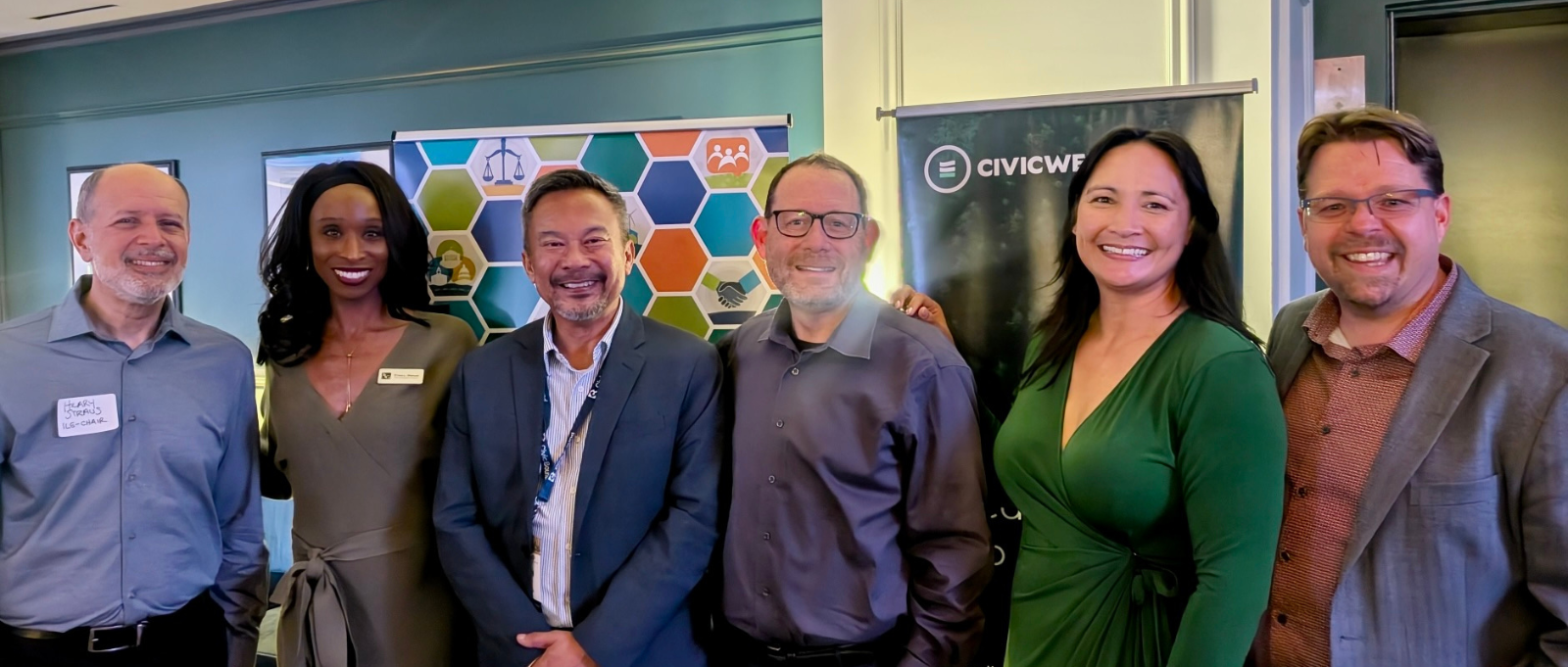
We see leadership in every corner of this work, from natural resources and renewable energy, to housing and transportation, to adaptation and resilience. We certainly saw leadership from CivicWell’s Board of Directors in recent weeks. El Cerrito Mayor Gabe Quinto passed the reins as President of the League of California Cities to new leadership at the culmination of his two-year term. As Chair for the California Association of Local Agency Formation Commissions (CALAFCO), Monterey County Supervisor Wendy Root Askew welcomed attendees at the annual conference for an organization that guides sustainable community growth in California jurisdictions. Humboldt County Supervisor Mike Wilson welcomed the California Planning Roundtable to his community last weekend as they embarked on programs about a new mixed-use transit center, infill housing, energy innovations, and Tribal partnerships. And elected leaders gathered at the Resilient Leaders Mixer, co-hosted by CivicWell and the Institute for Local Government.
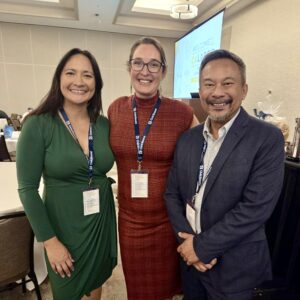
As we look ahead to election outcomes in local, state, and national races, we should heed Secretary Crowfoot’s insight. Regardless of who is in office, the work of cultivating sustainable and livable communities transcends any single leader. I observed thousands of people attending several convenings during this particularly busy fall conference season. Each and every one of these people has the potential to move the needle in the communities they live in, work for, and fight on behalf of. Indeed, we are all resilient leaders.

By Steve Hansen, Managing Partner, Lighthouse Public Affairs
In 1932, U.S. Supreme Court Justice Louis Brandeis wrote that a single courageous state could “serve as a laboratory” for the rest of the country, which coined the phrase “laboratories of democracy.” I have long added a corollary: if the states are the laboratories, local governments are the petri dishes.
A little more than a decade ago, then-Lieutenant Governor Gavin Newsom made a version of that argument in his 2013 book, Citizenville. He urged government to stop treating technology as an afterthought and start using data and digital tools to serve people better and get ahead of problems before they became crises. The sharing economy was new, smartphones were reshaping daily life, and many of the most interesting experiments were happening at city hall, not in the State Capitol.
CivicWell was often at the forefront of those conversations about technology, government and the sharing economy. But as the downsides of social media and parts of the sharing economy became clear, too many of us stepped back. We could have responded with the tweaks and reforms that would have kept the benefit without the burden.
Next week, Californians will choose Governor Newsom’s successor. As one era closes, it is worth asking what happened to that optimism, and how local government can reclaim it.
The pressures on cities and counties today are enormous. Residents expect action on homelessness, public safety and the cost of living. Inflation has driven up the price of nearly everything local governments buy, from asphalt to insurance to labor. Washington has pulled back from California, and at times worked against it, on disaster response, health care and the programs that address our deepest unmet needs. The state can only backfill so much.
The result is a public mood that writer Cory Doctorow captured with a crude but memorable word: “enshittification.” Services feel slower, lines feel longer and potholes feel deeper. Many people have concluded that nothing works as well as it used to.
Local government can help break that cycle. But only if we stop letting fear crowd out good judgment about new tools.
Right now, the public conversation about artificial intelligence is dominated by data centers, energy demand and job loss. Those are serious issues that deserve serious policy. But they have obscured a quieter story: the practical, unglamorous ways these tools can help public agencies do more with the people and dollars they already have.
Consider what local governments actually do. They fix roads, collect garbage, deliver water, keep neighborhoods safe, plan communities and enforce codes. Counties run public health, health care and social services. Nearly every one of those functions generates data, and much of it sits unused.
The City of San Jose offers a glimpse of what is possible. The city mounted cameras on city vehicles and trained an AI model to spot potholes, illegal dumping and other hazards in real time. In the first phase of its pilot, the system identified potholes with 97 percent accuracy. Crews can find problems before residents have to report them.
Wildfire offers another example. The ALERTCalifornia network, run by UC San Diego with funding from CAL FIRE, uses AI to watch more than 1,200 cameras for signs of smoke. In 2024, it spotted 636 fires before anyone called 911.
Now imagine similar approaches across the rest of local government:
• Plan check tools that flag incomplete permit applications in minutes rather than weeks.
• Caseworkers who spend more time with families and less time re-entering the same information into multiple systems.
• 311 and code enforcement systems that take complaints in any language and spot patterns before small problems become neighborhood blight.
• Water and sewer agencies that predict pipe failures before a main breaks.
• Autonomous vehicle networks that bring reliable, on-demand mobility to rural communities where fixed-route transit has never penciled out.
None of these replaces public employees. Each one gives them back time for the work only people can do.
This is a crucial distinction because the fear of technology is not irrational. Residents worry about privacy, surveillance, bias and job loss, and they are right to demand guardrails. But refusing to use these tools at all carries its own costs: slower service, frustrated residents and the steady erosion of trust that makes every other public priority harder to fund.
The answer is not to choose between fear and hype. It is to adopt clear rules for transparency, data protection and human oversight, and then let local governments experiment, measure results and share what works. Petri dishes, after all, are meant for experiments.
Over a century ago, the horseless carriage frightened plenty of people too. We did not ban it. We built roads and wrote the rules of the road. Today's tools deserve the same approach: not naive enthusiasm, but the practical work of harnessing them to improve people’s lives.
CivicWell is well positioned to help lead that work. Its focus on climate change, smart use of resources and testing new ideas makes it a natural convener for local governments that want to use these tools to build more resilient communities.
Which brings us back to the election.
A new Legislature convenes in December, and a new Governor takes office in January. Together they will set the tone for whether Sacramento treats local innovation as something to encourage or something to fear and regulate after the fact.
Cities and counties should not wait to find out. The jurisdictions that arrive with working pilots, honest results and practical asks for funding and flexibility will help write the next chapter.
Citizenville asked us to imagine a government that worked as well as the technology in our pockets. Thirteen years later, the tools have finally caught up.
The question is whether we will have the courage to use them.
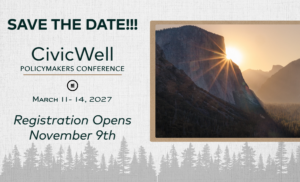
The 35th annual CivicWell Policymakers Conference will take place on March 11 – 14th 2027. The Conference gathers local elected officials from across California in an inspiring and collaborative environment.
The theme for the 2027 Conference will be “The Collective Power of Regional Leadership”. During a time of new state leadership, shifting federal priorities, and extreme weather threats, local leaders can address challenges by leveraging the collective power of California’s diverse regions. At this year’s CivicWell Policymakers Conference, we’ll examine how California communities can turn regional relationships into real capacity – for funding, for coordination, and for disaster response. As fires, flooding, and other crises threaten lives and strain infrastructure, no single agency or jurisdiction can meet the moment alone. This year’s program will share promising practices from the regional groups and forge new relationships between state and local leaders to coordinate before, during, and after the next crisis.
Registration will open November 9th, 2026. If you would like to learn more, click below.
The Policymakers Conference is open only to elected officials, strategic partners, and sponsors of this event. To learn more about sponsorship, click here.