





June 8, 2026
Topic
I attended three important state-led convenings last week in Sacramento that reveal a California conflicted with itself about our climate future — best understood against a backdrop of election-year politics. In one room, California was celebrating its most sophisticated climate vulnerability data yet. In another, it was preparing to redirect $2 billion per year away from the communities that data shows we need to protect.
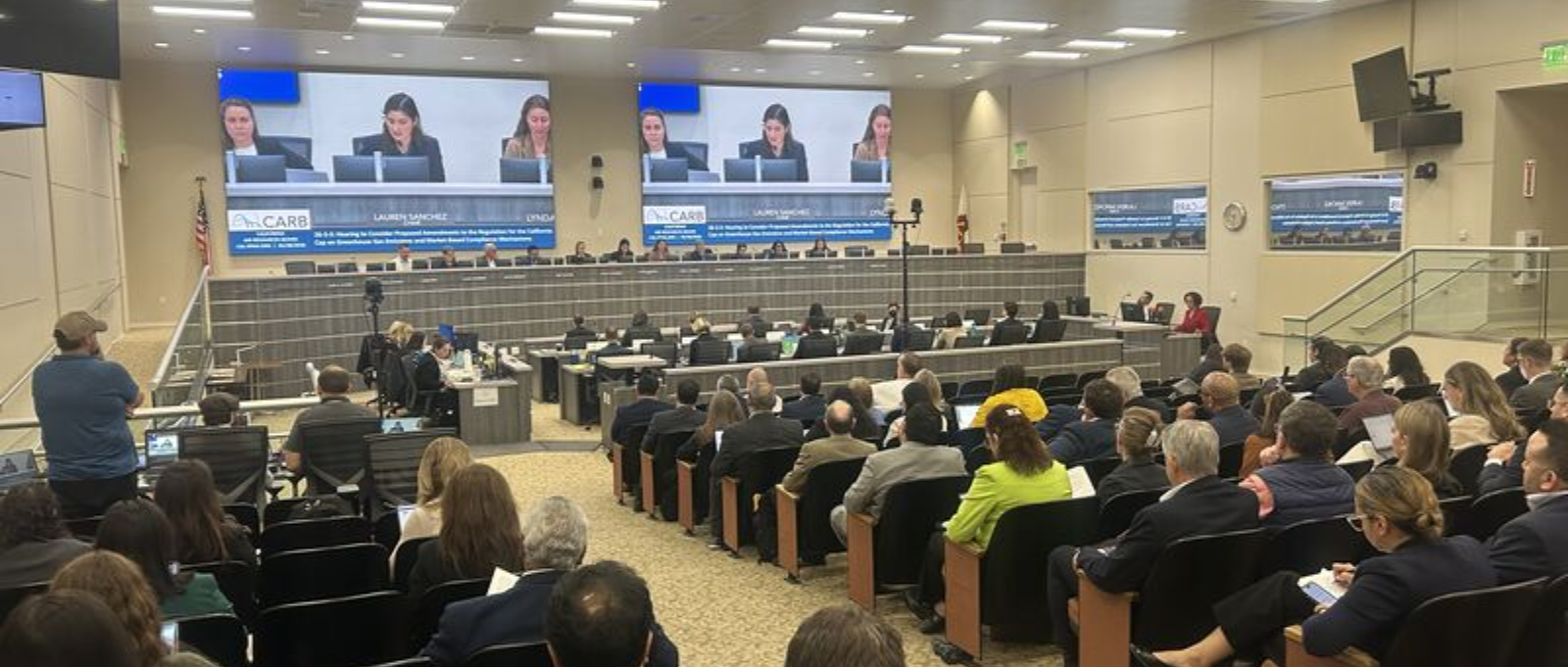
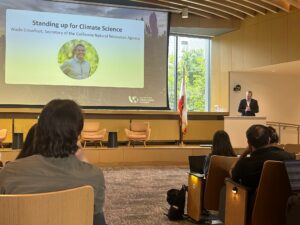
The State’s Preparing for Impact Convening (May 26) assembled data experts to unveil more precisely projected and culturally-grounded climate vulnerability information soon to be released in the 5th Climate Assessment — a well-deserved moment after years of hard work. And while California toots its horn about how progressively it is standing up for climate science and its commitment to helping the most underserved and vulnerable communities, just down the street CARB was preparing for a hearing (May 28–29) to consider amendments to the Cap-and-Invest program that would effectively redirect $2 billion per year in Greenhouse Gas Reduction Fund (GGRF) revenues to polluting big business. The GGRF represents one of the only recurring sources of funding available to communities to help cut the greenhouse gas emissions upstream of the climate disasters we can now more clearly see barreling toward us.
The CARB hearing presented an abrupt proposed shift in how Cap-and-Invest auction revenues would be allocated through the GGRF — in direct conflict with AB 1207 and SB 840, which
reauthorized the program and its tiered allocation structure just last year. Senators Blakespear and Menjivar responded swiftly, organizing a letter and a hearing to raise concerns largely around the proposed Manufacturing Decarbonization Incentive (MDI) and its impact on Cap and Invest program integrity and revenues. Many environmental groups wrote their own letter stating strong opposition.
A week before the hearing, Canary Media published a piece explaining what was at stake:
“The proposal could lead to a $4 billion loss in auction revenue, equating to $2.3 billion less for the GGRF and $1.7 billion less for the Climate Credit from 2027 to 2030, according to an analysis by data scientists Kyle Meng and Jordan Wingenroth of UC Santa Barbara’s Environmental Markets Lab. In a report to lawmakers, the Legislative Analyst’s Office also found it “could somewhat reduce the overall amount of Climate Credit” funding, and would cut annual GGRF revenues to about $2 billion per year — roughly half what they’ve been in recent years.
That “would be inadequate to fully support Tier 2 programs” the report found, “and leave no funding for Tier 3 programs.”
At the CARB hearing, more than 300 people signed up for public comment — 200 of them in the room, and 1,000 more in writing — mostly opposing this move with heartfelt remarks about things like the air quality needs of disadvantaged communities and the immense gaps that would be left in clean transit systems. People are upset that the rushed proposal lacked meaningful public participation beyond backroom meetings with industry. They question the integrity of the cap-and-invest program’s core objectives, and find it highly suspicious that the MDI will actually deliver promised benefits — that oil refinery subsidies will translate to reduced gas price volatility. Industry representatives present seem quite giddy at their success at getting here, while continuing to complain about economic and regulatory uncertainty with no apparent concern for the uncertainties facing communities. They emphasize the threat of “leakage,” a thinly veiled way to say their companies may leave the state if they don’t get funding to support their compliance with emission cap allowances, which have also been reduced. Thinking back to the origins of cap-and-trade policy and AB 32, it’s hard to imagine what the original policy proponents would say about using auction proceeds to socialize general risk for the oil industry.
And despite hours of testimony, no one — including me (3:48) — has stated the obvious. This is not a move based on straightforward staff analysis of a balanced approach to emissions reduction investments. And it’s not just about creating a predictable and level playing field for businesses, which we can all agree is wise and reasonable. It’s political. Big business interests are shooting their shot knowing Newsom needs campaign friends and a more centrist, pro-business image as he prepares for a presidential bid, and keeping climate promises doesn’t fit the new agenda.
By Friday I was back home, sitting online waiting for CARB’s decision, watching some Board Members go to great lengths to justify what seems a foregone approval of the MDI program and the dismantling of community climate investments — with promises of “strong teeth,” “guardrails,” and “off ramps.” Board member Diane Takvorian heroically tried her best to remove MDI from the resolution, arguing the process is backwards and we should vet the program before enacting it. However, she was only able to bring two out of the twelve other board members with her, most feeling the pressure from a looming and confusing deadline.
I toggled back and forth to a simultaneous meeting of the Governor’s Office of Land Use and Climate Innovation ICARP Technical Advisory Committee, where – in stark contract – members and speakers diligently discussed the overwhelming need and best innovations for better adaptation financing to manage the costly and catastrophic place-based fire, heat, drought, and flood risks projected in the 5th Climate Assessment. Watching these things in parallel, it’s impossible not to feel frustrated by the irony — the best thing we can do to avoid the nightmarish impacts of climate change on our health, natural resources, and economy is to fund the kinds of work that can prevent them from getting worse.
And just when it’s easy to get really down, democracy reminds you that sometimes it works. Senate climate champions are using the budget process to fight back against this decision. With “a deal is a deal” budget bill language (p. 29) released on May 28th, the Senate recommends rejecting his GGRF expenditure plan in the Governor’s Proposed Budget and putting serious hurdles on allocations to the MDI program.
As the week wound down, CARB Chair Lauren Sanchez has led the Board to a decision to approve but “pause” the MDI program changes, citing the volume of “moving” public comments made during the hearing. The final resolution calls for further staff analysis and public engagement, as well as the need for the Governor and legislators to come together to identify stable funding for localized projects. As evidenced in the many articles like those listed below that don’t paint the decision in the headlines the Governor’s Office was likely hoping for, the small concessions only slightly softens the blow to communities.
- (Canary Media) California makes controversial change to cap-and-invest program – Air regulators say the new plan balances industry needs and environmental goals — but critics worry that the state has just undermined its own emissions targets.
- (Associated Press): California air regulators update a key climate program, sparking pushback from environmentalists
- (Politico) Newsom’s climate rules bend to gas price politics: California is changing its climate policies in the face of affordability concerns as Gavin Newsom looks toward 2028.
- CalEnviroVoters: EnviroVoters on CARB: Californians want a strong Cap-and-Invest program
It’s not entirely clear what happens next. But climate friends, take to heart, there is power to banding together like we did this week and will undoubtedly do again. This is who we are. Thanks to some incredible new projections, we know what’s at stake and that there’s no option but to keep pressing forward. As we look ahead to new state leadership, it’s time to pick ourselves back up and keep our eyes on the billion dollar question, how can California create a truly stable – and less pilferable – way to fund climate action?
With genuine gratitude to the many expert agency staff members that continue to do their best to help California reduce the risks of climate change under turbulent leadership.